

Social-Emotional Learning (SEL)
"But the fruit of the Spirit is love, joy, peace, forbearance, kindness, goodness, faithfulness, gentleness and self-control." - Galatians 5:22-23 (NIV)
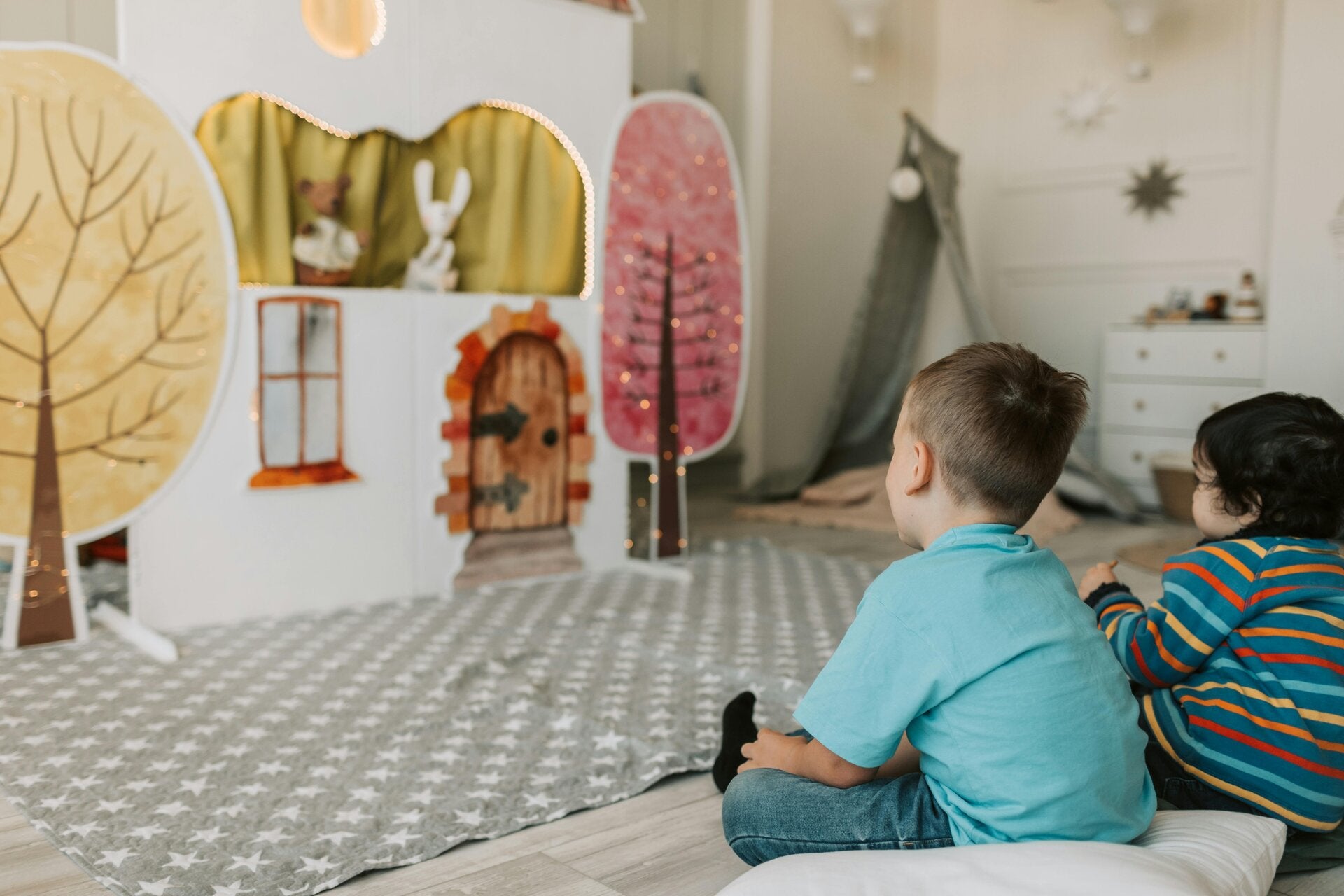


We believe that social-emotional learning (SEL) is just as important as developing early literacy and math skills. When children learn how to recognize and manage their emotions, build healthy relationships, solve problems, and make responsible decisions, they are better prepared for success in school and in life. Our inclusive Christian preschool intentionally creates a nurturing environment where children with typical and atypical development feel safe, loved, and respected. Guided by our faith, we teach children to treat others with kindness, compassion, patience, and forgiveness, following the example of Jesus Christ. These values are woven into our daily routines and classroom interactions, helping children develop strong character while building confidence and emotional resilience. The Collaborative for Academic, Social, and Emotional Learning (CASEL, 2024) identifies self-awareness, self-management, social awareness, relationship skills, and responsible decision-making as the five core competencies that support children's academic achievement and lifelong well-being.
To support social-emotional growth, our teachers implement evidence-based practices from the Pyramid Model, a nationally recognized framework designed to promote positive behavior and emotional development in young children (National Center for Pyramid Model Innovations [NCPMI], 2024). Teachers establish predictable routines, build warm and trusting relationships, model appropriate social interactions, and explicitly teach emotional vocabulary through books, songs, games, and daily conversations. For example, during morning meeting, children use a feelings chart to identify and discuss their emotions. This simple routine encourages self-awareness while helping teachers identify children who may need additional emotional support.
Children with exceptionalities often benefit from individualized strategies that help them participate successfully in classroom activities. For example, a child with autism spectrum disorder may use a visual schedule and a first-then board to reduce anxiety during transitions between activities. Another child with attention-deficit/hyperactivity disorder (ADHD) may benefit from movement breaks, flexible seating, and positive reinforcement to remain engaged during group instruction. Teachers also use social stories, role-playing, and peer modeling to teach friendship skills, problem-solving, and conflict resolution. These evidence-based instructional strategies allow children with diverse learning needs to develop meaningful relationships while learning alongside their peers in an inclusive classroom. The Division for Early Childhood (DEC, 2023) recommends embedding individualized supports within everyday routines to promote participation and social competence for young children with disabilities.
Our classrooms also include a Peace Corner, a quiet space where children can practice self-regulation using calming strategies such as deep breathing, sensory tools, books about emotions, soft music, and prayer. Teachers guide children through conflict resolution by encouraging them to express their feelings respectfully, listen to one another, and work together to solve problems. Rather than using punishment, we focus on teaching appropriate replacement behaviors and reinforcing positive choices. By creating a classroom culture grounded in love, respect, and grace, HPCCC helps every child develop the emotional skills needed to build friendships, overcome challenges, and become caring members of their school, family, and community.
Create Your Own Website With Webador